Suit · swords
King of Swords
king of Swords
Image of King of Swords
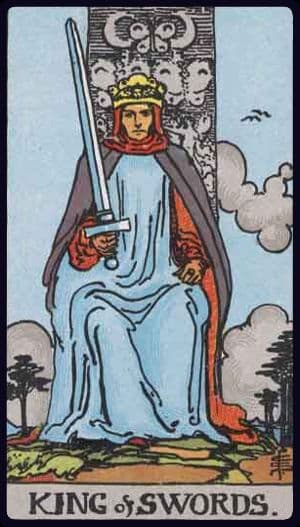
The King of Swords sits on a throne carved with butterflies and sylphs, sword angled toward truth — the mature mind that commands language rather than being commanded by it. He is judge, strategist, and teacher: Air at its most structured, where thought serves justice. The card reminds us that real authority in the realm of intellect is measured not by how decisively one speaks, but by how faithfully one aligns words with what is fair and verifiable.
An artistic retelling of the card's symbolism, not a historical treatise.
Symbols in this card
Details visible in this Rider–Waite–Smith image, read as prompts for reflection.
Sword held upright
The ruler's weapon becomes a sign of reason and accountability.
Butterflies on the throne
The carvings suggest thought can change and mature.
Upright meaning
Intellectual authority and ethical reasoning guide decisions — you weigh facts, principles, and consequences with disciplined fairness. Leadership here is exercised through clarity of thought, not force of personality.
- Logical analysis supports just outcomes
- Commitment to truth over convenience
- Mentorship or governance with steady standards
Relationships
Reason can help resolve a dispute when both people's feelings count as information. Be fair without turning the bond into a courtroom.
Work
A complex decision needs clear principles, evidence, and accountable leadership. Explain the reasoning so others can assess it.
Money & resources
Strong analysis can reveal a better plan. Verify assumptions and consult an appropriate expert for high-stakes choices.
Reflect: What decision in your life would benefit from the same impartial standards you would apply for someone you respect?
Try: Write the criteria you would use to judge this situation fairly, then apply them to your own choice before acting.
Reversed meaning
Reason becomes rigidity — rules applied without context, or intellectual pride dismisses what the heart knows. Restore balance by letting empathy inform judgment rather than replace it.
- Cold logic overlooks human complexity
- Manipulation hides behind formal correctness
- Abuse of authority through verbal dominance
Relationships
Logic may be used to win rather than understand. Watch whether one person's authority has crowded out honest dialogue.
Work
A rigid or self-serving rule can erode trust. Reopen the decision to evidence and people it affects.
Money & resources
Confident advice is not always sound advice. Examine its incentives and seek an independent view when necessary.
Reflect: Where might you be using correctness to avoid vulnerability or compassion?
Try: Ask one person affected by your decision how they experience it — and listen without defending your reasoning.