A complete tarot reading, with annotations
An editorial example of Week Ahead. These cards and the question were chosen to explain the reading structure; this is not a user's reading or a prediction for you.
1. Set the question and positions
Example question: How can I make room for a creative project during a busy week? The question names one situation and leaves the response within the person's influence. It does not ask whether the project is destined to succeed.
Week Ahead uses Energy, Challenge, and Focus. In a real reading, the application randomly selects three distinct cards before any AI interpretation. For this illustration, all three cards are upright. The positions stay fixed while the cards provide different symbolic perspectives.
2. Energy — The Star
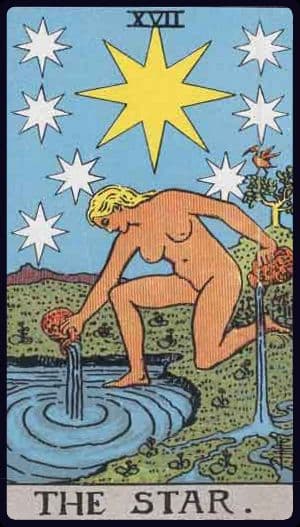
Illustrative card · Energy
The Star — read the card meaningExample interpretation: The Star offers a lens of renewal. You might approach the project as something that restores curiosity, rather than another test of whether you are productive enough. A modest return to it could matter more than a dramatic result.
Why this fits: renewal comes from the card's catalog meaning. Energy asks how you approach the week, so the interpretation connects that theme to the question. It does not promise inspiration or say the project will succeed.
3. Challenge — Two of Pentacles
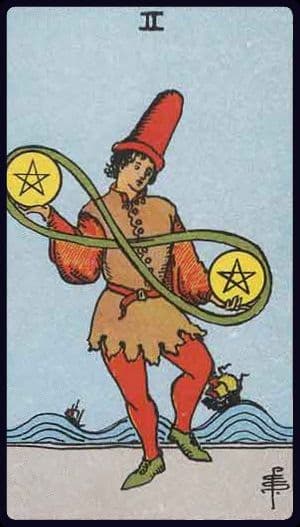
Illustrative card · Challenge
Two of Pentacles — read the card meaningExample interpretation: The Two of Pentacles brings attention to balancing demands. The challenge may be expecting every part of the week to receive equal attention. Notice which commitments are fixed and which could be made smaller.
Why this fits: the image of juggling becomes a question about the workload already named. It is not evidence that an unexpected disruption is coming. The reader can check this interpretation against their actual calendar.
4. Focus — Eight of Pentacles
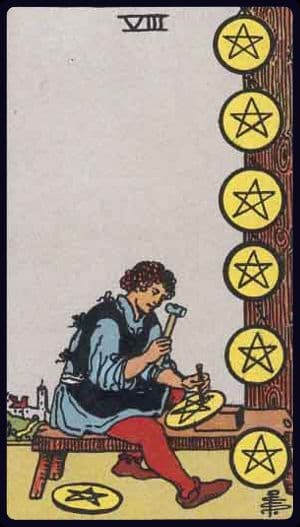
Illustrative card · Focus
Eight of Pentacles — read the card meaningExample interpretation: The Eight of Pentacles suggests steady practice. Choose one small piece of the project you can work on with care. A short, protected session may be a more useful focus than waiting for a completely free day.
Why this fits: practice and craft connect the card to an action within the reader's control. The interpretation leaves room for limits; it does not turn persistence into a guarantee of recognition or income.
5. Synthesis — connect the cards
Example synthesis: Let the project be a source of renewal, while being honest about competing demands. Instead of fitting everything into the week, make one deliberate space for practice. Curiosity, realistic limits, and a manageable session can work together.
Why this fits: the synthesis connects renewal, balance, and practice. It resolves a tension between the positions instead of repeating three card definitions or adding an unrelated claim about the person's life.
6. Reflect on this, then try one next step
Reflect on this: What would make this project feel worth returning to even if I only had twenty minutes?
Try this next: Choose one twenty-minute task and find a realistic place for it in this week's calendar. If there is no room, write down what would need to change before you can make room.
The reflection invites an answer; the next step is a small experiment. Either can be adapted or declined. Neither requires drawing again to receive permission.
7. Clarify once, then keep your own record
An optional follow-up could ask: How can I apply the Eight of Pentacles when my available time changes each day? A card-grounded response might suggest defining a small repeatable task rather than a fixed hour. The live product allows one clarifying follow-up per active reading, when available.
After Save, a possible journal note is: I want a manageable return to the project, not a promise of progress. Later, add what happened: I made the outline but moved the session twice. These are illustrative notes, not a testimonial. What happened matters more than whether the cards seemed right.
The example is fixed editorial content. Your real draw will differ, and its text may come from the catalog template or an AI interpretation. Nireye's text is a perspective to evaluate, not evidence of hidden knowledge.